Crystal Basics
How to Tell If a Crystal Is Natural or Synthetic: A Practical Guide to Natural Crystals
By Mukesh Choudhary · 26 October 2026 · 8 min read
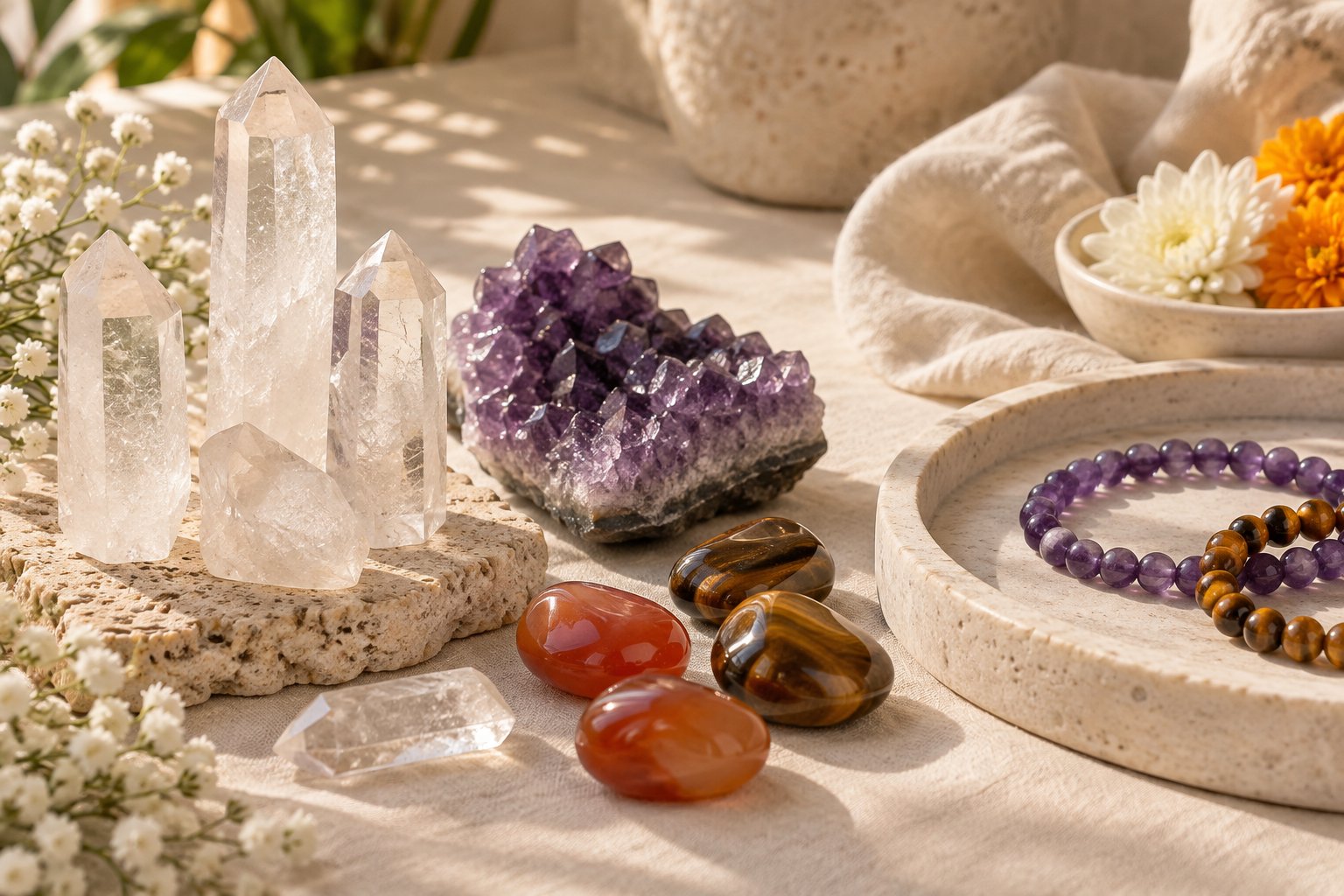
Can You Identify Natural Crystals at Home?
You can spot reasons to ask questions, but you cannot reliably authenticate natural crystals at home. Appearance, temperature, price and photographs cannot prove whether a stone formed underground or in a laboratory.
The practical approach is to combine careful observation with written disclosures, a clear return policy and professional testing when needed. This guide explains how to tell if a crystal is natural or synthetic without relying on damaging tests or misleading shortcuts.
Natural, Synthetic, Treated and Imitation Crystals: What Is the Difference?
When shopping for natural stones and crystals, separate three questions: What material is it? Where did it form? Has it been treated? “Real” and “fake” are often too vague.
Category | What it means | What to check |
|---|---|---|
Natural | Formed through geological processes | Whether treatments are disclosed separately |
Laboratory-grown synthetic | Made in a laboratory, with essentially the same composition and crystal structure as its natural counterpart | Whether laboratory-grown origin is clearly stated |
Treated natural | Naturally formed material subsequently altered, such as by heating or dyeing | The treatment and any care requirements |
Imitation | A different material made to resemble the named stone | The actual material, such as glass or resin |
These distinctions describe material identity and origin, not simply quality or attractiveness. [Source needed]
Natural Crystals and Laboratory-Grown Counterparts
Natural crystals form through geological processes. Synthetic counterparts grow in controlled laboratory conditions and share the essential chemical composition and crystal structure of the corresponding natural mineral. [Source needed]
Synthetic does not automatically mean fraudulent. Accurately disclosed laboratory-grown quartz is a different purchase from laboratory-grown quartz misleadingly sold as naturally formed.
Treated Natural Stones
Dyed or heat-treated stones can remain natural in origin. Treatment describes what happened after formation; it does not necessarily change where the original material formed. [Source needed]
However, “natural” does not mean “untreated”. Ask sellers to state both origin and known treatments rather than using “natural” as a complete description.
Glass, Resin and Other Imitations
Glass or resin may resemble quartz or another gemstone without being that mineral. These are imitations, not synthetic counterparts of the mineral. [Source needed]
Clearly labelled decorative alternatives are not inherently dishonest. The problem arises when their actual material is hidden or they are sold as natural crystal stone.
Visual Clues in Natural Crystals: Useful, but Not Proof
Look closely in neutral lighting, with a magnifier if available. Treat what you see as a starting point for questions—not a reliable home verdict.
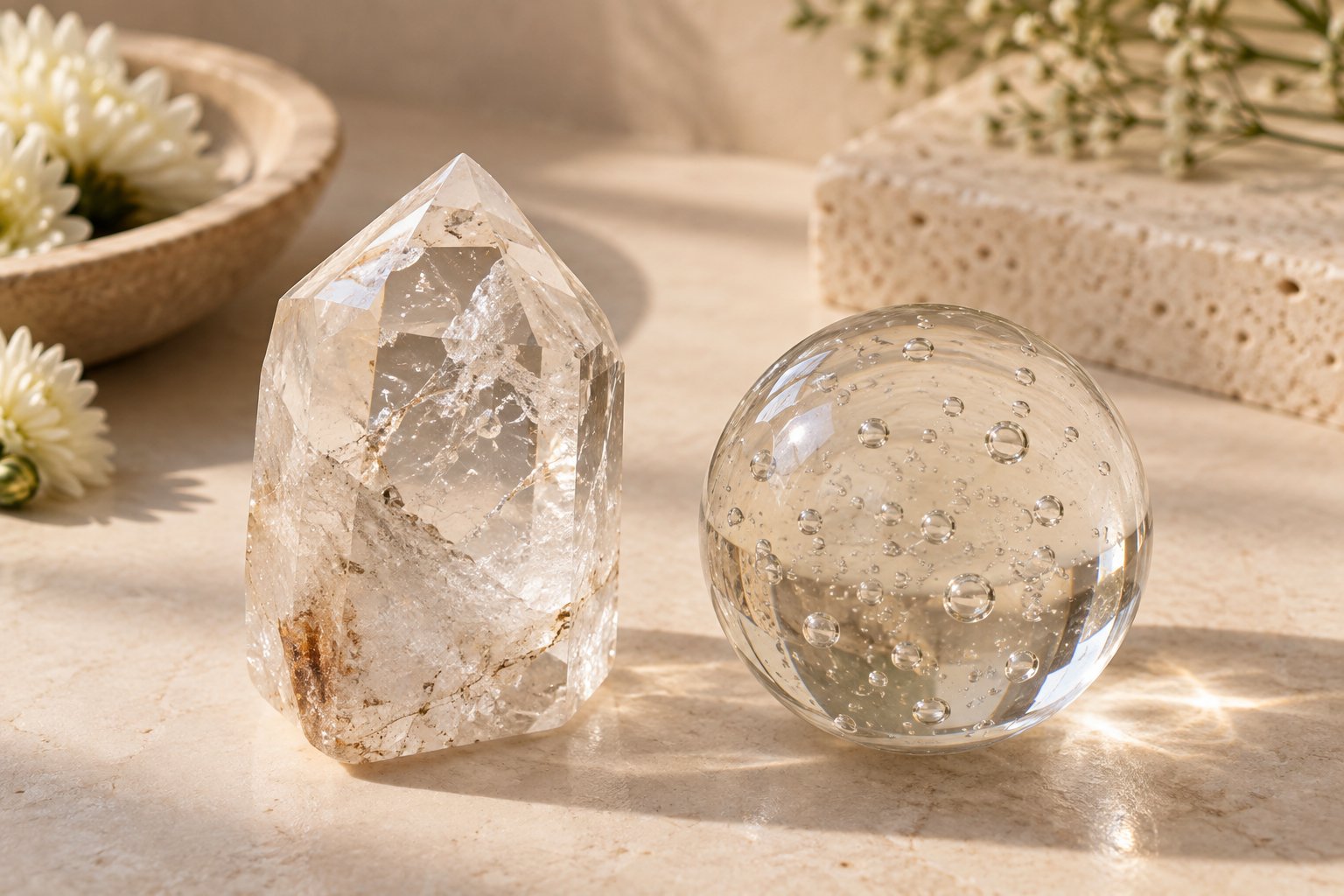
Inclusions and bubbles offer clues, not a final verdict.
Inclusions and Colour Distribution
Inclusions are features enclosed within a stone. Internal fractures, mineral inclusions and uneven colour may offer useful clues, but natural material can look exceptionally clean, while laboratory-grown material can also contain inclusions. [Source needed]
Avoid rules such as “imperfections mean natural” or “perfect colour means synthetic”. Neither reliably establishes origin.
Bubbles and Unusually Bright Colours
Round bubbles can suggest glass. However, fluid inclusions in natural minerals can also contain bubbles, and interpreting them requires more than spotting a round shape. [Source needed]
Likewise, vivid colour alone does not establish imitation or treatment. Ask about unusually intense colour, but do not assume every bright stone is dyed or every muted stone is untreated.
Why Photographs, Coldness and Price Cannot Prove Origin
Lighting, editing, camera settings and your screen can change apparent colour or hide internal details. Photographs cannot reliably establish geological origin or treatment status.
Coldness is also unreliable: glass and other materials can feel cool, and the sensation depends on surrounding conditions. [Source needed]
Neither a bargain nor a premium price authenticates a natural crystal stone. Use price to decide how much verification you need, not as evidence of identity.
How to Assess Quartz, Amethyst, Carnelian and Tiger Eye
These examples help you make useful observations. None offers a definitive visual authenticity test.
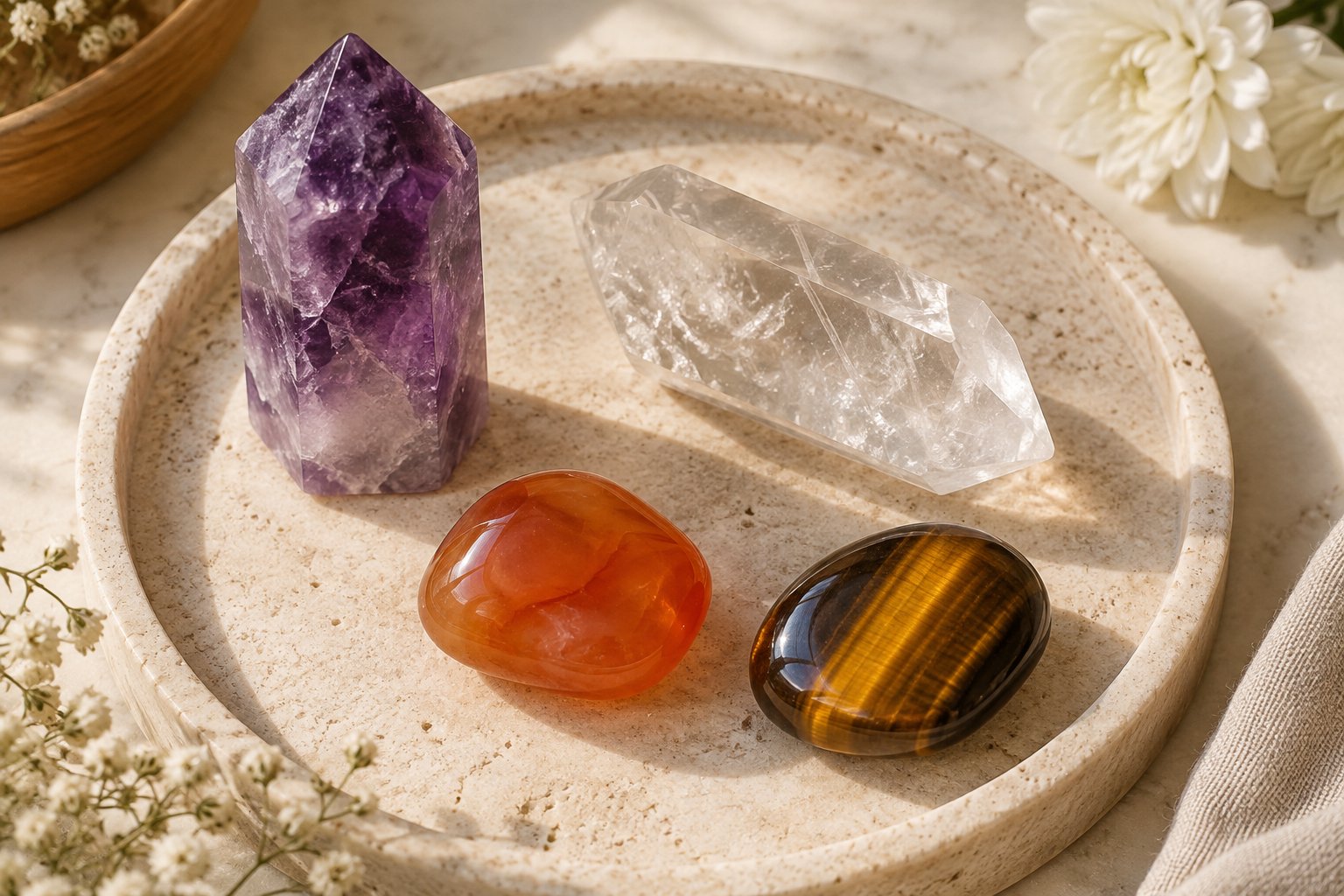
Look closely at colour distribution, internal features and surface appearance.
Natural Clear Quartz
Natural clear quartz may contain fractures, cloudy areas or inclusions, but it can also be very clear. A flawless appearance does not prove laboratory-grown origin. [Source needed]
Ask whether the seller means naturally formed quartz, laboratory-grown quartz or a quartz-like imitation. Distinguishing natural from laboratory-grown quartz may require specialist gemological testing. [Source needed]
Natural Amethyst
In natural amethyst, you may observe purple colour zoning or internal inclusions. These are observations, not proof: photographs cannot reliably distinguish natural amethyst from synthetic material or establish treatment status. [Source needed]
Ask for views from several angles and a written origin statement. For a costly purchase, consider testing rather than relying on the shade of purple.
Natural Carnelian Stone
Carnelian is a variety of chalcedony associated with orange-to-red colours. Material sold as carnelian may have undergone heating or dyeing. [Source needed]
When assessing a natural carnelian stone, ask specifically about both treatments. Colour concentrated along cracks is a reason to investigate possible dyeing, not a conclusive diagnosis. [Source needed]
Natural Tiger Eye
Natural tiger eye typically has a fibrous appearance and a silky band of reflected light that moves as the stone or light changes position. This effect is called chatoyancy. [Source needed]
Ask for a slowly rotating video to observe the effect. It is useful to examine, but a moving band alone cannot independently prove natural origin.
A Non-Destructive Buyer Checklist for Natural Crystals in India
Use these checks for marketplace listings, independent websites, social-media sellers and physical shops. Avoid scratch, heat or chemical tests: they can damage the item and still leave your main question unanswered.
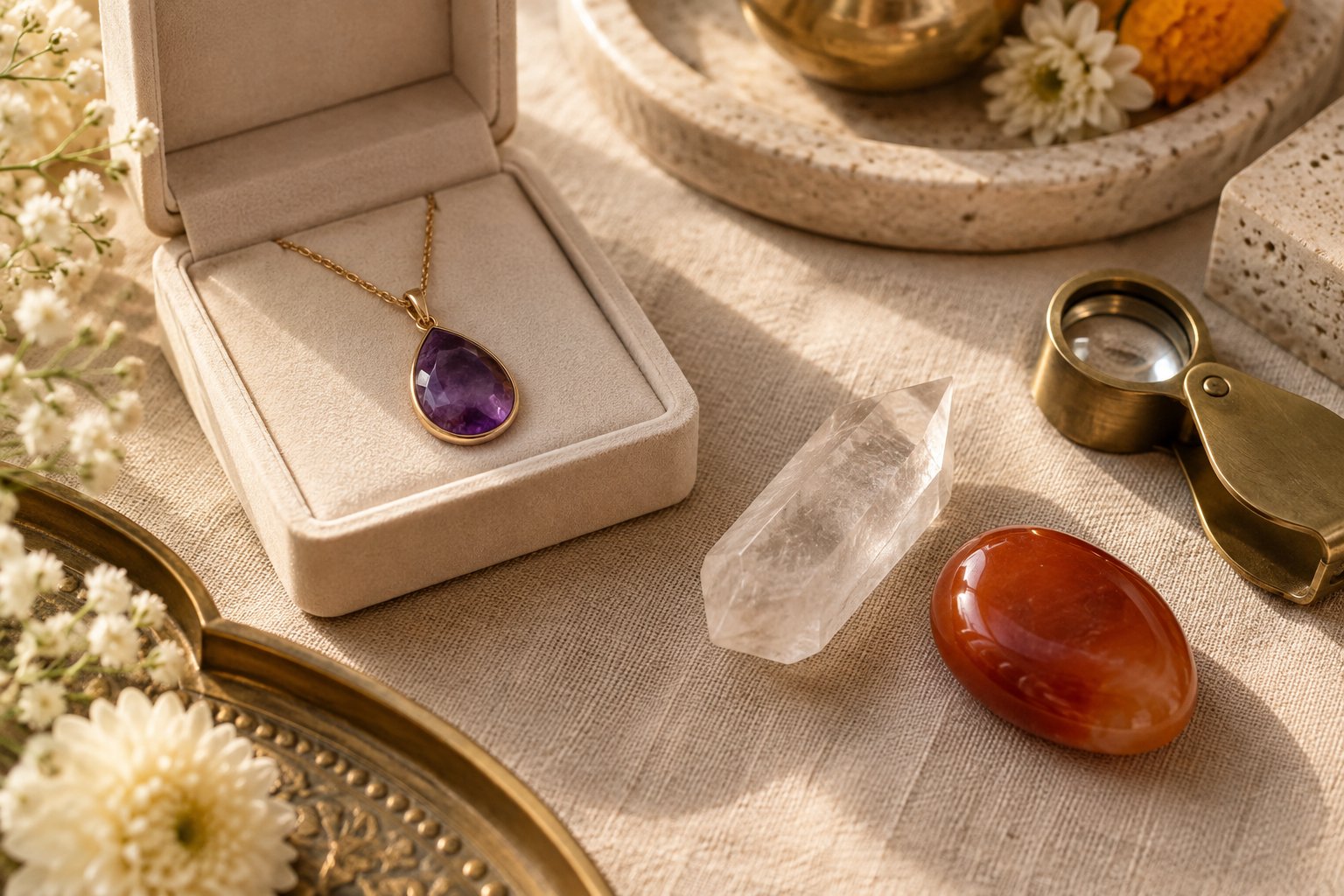
Ask for treatment disclosures, actual-item photos and clear return terms.
Ask for Exact Identity and Written Treatment Disclosures
What is the mineral or material name?
Is it naturally formed or laboratory-grown?
Is it dyed, heated, coated, filled or otherwise treated?
Are any beads, backing layers or decorative components glass or resin?
Which details are confirmed, and which are unknown?
Save the answers in writing. “We do not know” is more useful than an unsupported guarantee because it shows what still needs checking.
Request Actual-Item Photos and Videos
Request multiple angles, neutral lighting, dimensions and a video of the exact item. For jewellery, ask whether the images show the actual piece or only a representative sample.
For bead strands, clarify whether disclosures apply to every bead. Even excellent photographs cannot authenticate origin, but they help document what was offered.
Check the Invoice and Return Policy
Request an invoice with the seller’s details and a clear product description, including the stated material and any disclosed treatment.
Check the return deadline and when it begins.
Read exclusions for jewellery, customised pieces and sale items.
Confirm who pays return shipping and whether testing affects return eligibility.
Ask what happens if independent testing contradicts the listing.
If you plan to test the item, agree on enough time before paying. Keep the listing, messages, invoice and delivery records.
Ask What Supports the Seller’s Claims
Terms such as “certified”, “original” and “100% natural” need supporting detail. Ask who issued the certificate, what was tested and whether it covers your exact item.
Seller assurances and spiritual descriptions are not evidence of mineral identity. A generic certificate for a product range should not be assumed to authenticate an individual stone.
When to Get a Gemological Report—and How to Verify It
Professional testing is worth considering for expensive jewellery, disputed descriptions, significant untreated claims or natural-versus-synthetic questions that visual inspection cannot settle.
For an inexpensive decorative purchase, weigh the testing cost against the purchase price and your need for certainty. If natural origin is essential, unresolved uncertainty may be a reason not to buy.
Choose Testing That Answers Your Actual Question
Contact an independent gemological laboratory before submitting the item. Ask whether it can assess:
Material identity.
Natural versus laboratory-grown origin.
Relevant treatments, where detectable.
Report scope and testing limitations vary. Mounted jewellery and bead strands may require special arrangements; confirm what can be examined and whether conclusions cover the whole item. [Source needed]
Request non-destructive examination and ask about fees and turnaround time. A report identifying “quartz” may not answer your separate question about its origin.
Verify the Report Independently
Find the laboratory’s official contact details independently rather than relying only on a seller-provided link or QR code. Use its official verification service, if available, or contact it directly.
Match the report number, measurements, weight and item description. Check photographs where provided, and ask the laboratory about discrepancies.
A genuine report must also correspond to the stone you are buying. Report verification and item matching are separate checks.
FAQ: Buying Natural Crystals with Confidence
Can I Tell Whether a Crystal Is Natural from a Photograph?
No. Photographs can reveal questions worth investigating, but they cannot reliably establish natural origin, synthetic origin or treatment status.
Do Bubbles or Bright Colours Mean a Crystal Is Fake?
Not necessarily. These clues need context and expert interpretation. Seek testing when the distinction matters to your purchase.
Does a Crystal Feeling Cold Prove It Is Natural?
No. Glass and other materials can also feel cool. Touch is not a reliable authenticity check.
Are Dyed or Heat-Treated Crystals Still Natural Stones?
They may remain natural in origin, but they are treated rather than untreated. The description should make that distinction clear.
Can a Crystal’s Energy or Spiritual Meaning Confirm Authenticity?
No. Spiritual meanings are beliefs or cultural traditions, not evidence of mineral identity, treatment status or geological origin.
Conclusion: Buy Natural Crystals Through Evidence, Not Quick Tests
The safest way to buy natural crystals is to establish identity, ask about treatments, obtain actual-item information and check return terms. Use independently verifiable professional testing when an important question remains unresolved.
As you explore Crafting Crystals, keep this checklist handy. Choose with curiosity, ask clear questions and favour documented information over quick authenticity tricks.
Find a natural crystal that feels right for you.
Shop the collection